The real choice musicians face
The question is rarely whether a song has chords. The real question is how much information you need while playing. A guitarist supporting a familiar repertoire may only need the progression and section labels. A singer, worship leader, or accompanist may need the full lyric line with the chords placed in context.
That difference matters because the wrong format creates friction. Too little information and you lose confidence in the form or the lyric cue. Too much information and the screen becomes heavier than it needs to be. ChordFlow is useful here because it does not force one reading style on every musician.
When chords-only is the better choice
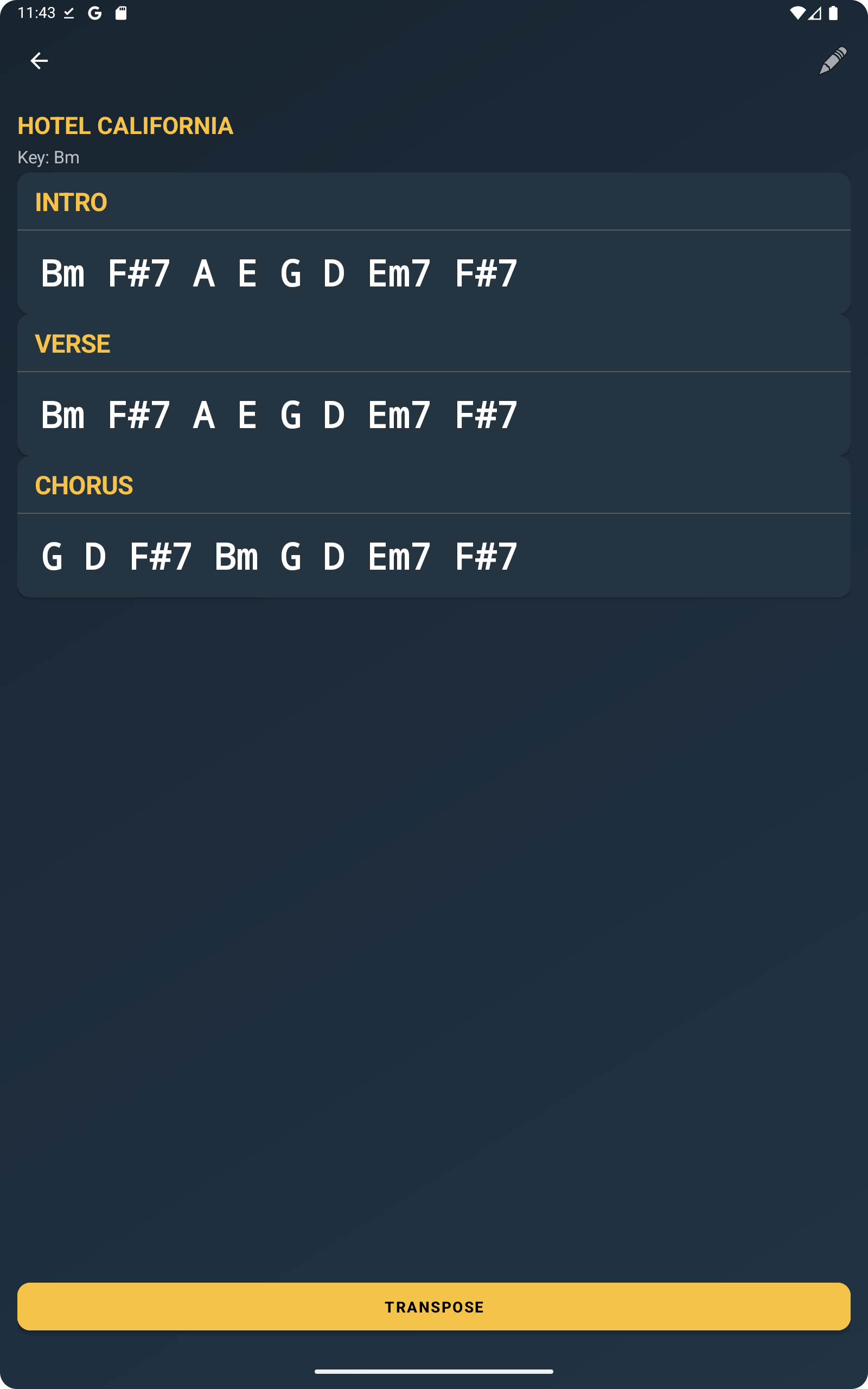
The chords-only view works well when you already know the song and mainly need structure, harmony, and section flow. In rehearsal, that can be the fastest way to keep moving without overloading the screen with text you no longer need to read word by word.
This format is especially useful for instrumentalists, rhythm section players, and musicians who are accompanying familiar material. If your job is to lock into the progression, watch the leader, and move cleanly from Intro to Verse to Chorus, the compact view often feels better.
Before the screenshot below, it helps to think of this format as the quickest structural overview. It gives you the harmonic map without forcing you to scan the entire lyric.
When lyrics + chords become more useful
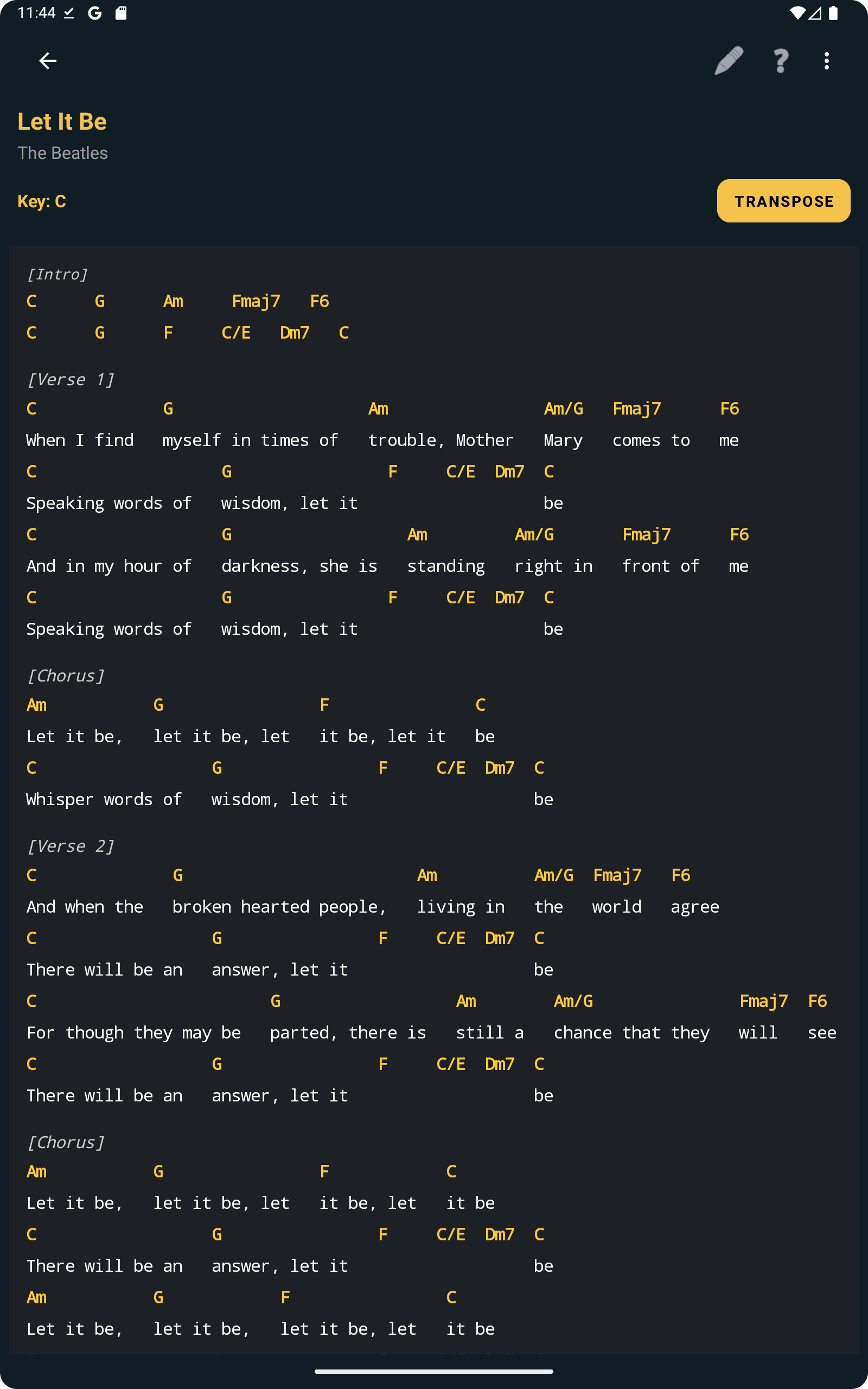
Lyrics with chords make sense when the words are part of the performance workflow. That includes singers, leaders, acoustic performers, or anyone who depends on lyric placement to stay aligned with the phrasing of the song. In those cases, chords above the words are not extra information. They are the information you actually need.
This format is also useful when songs are less familiar, when the structure changes subtly from verse to verse, or when a performance depends on precise entrances tied to the lyric itself. Instead of mentally reconstructing where the chord change belongs, you see it directly in context.
The next screenshot supports that point by showing how the lyric-based format makes the full song easier to follow line by line.
Rehearsal use case versus live accompaniment use case
In rehearsal, many musicians prefer whatever view lets them move fastest through the material. For some players, that means compact sections and chord blocks. For others, especially when the song is still being learned, the full lyric view prevents mistakes and reduces guesswork.
In live use, the choice depends on role. A player who already knows the text may prefer the cleaner chords-only layout. A musician leading the song, singing harmony, or supporting a congregation may prefer the lyric-based layout because it keeps musical and verbal cues together.
The strength of ChordFlow is not that one format is superior. It is that the app lets different kinds of musicians work in the format that best supports their role.
Following up with chord exploration
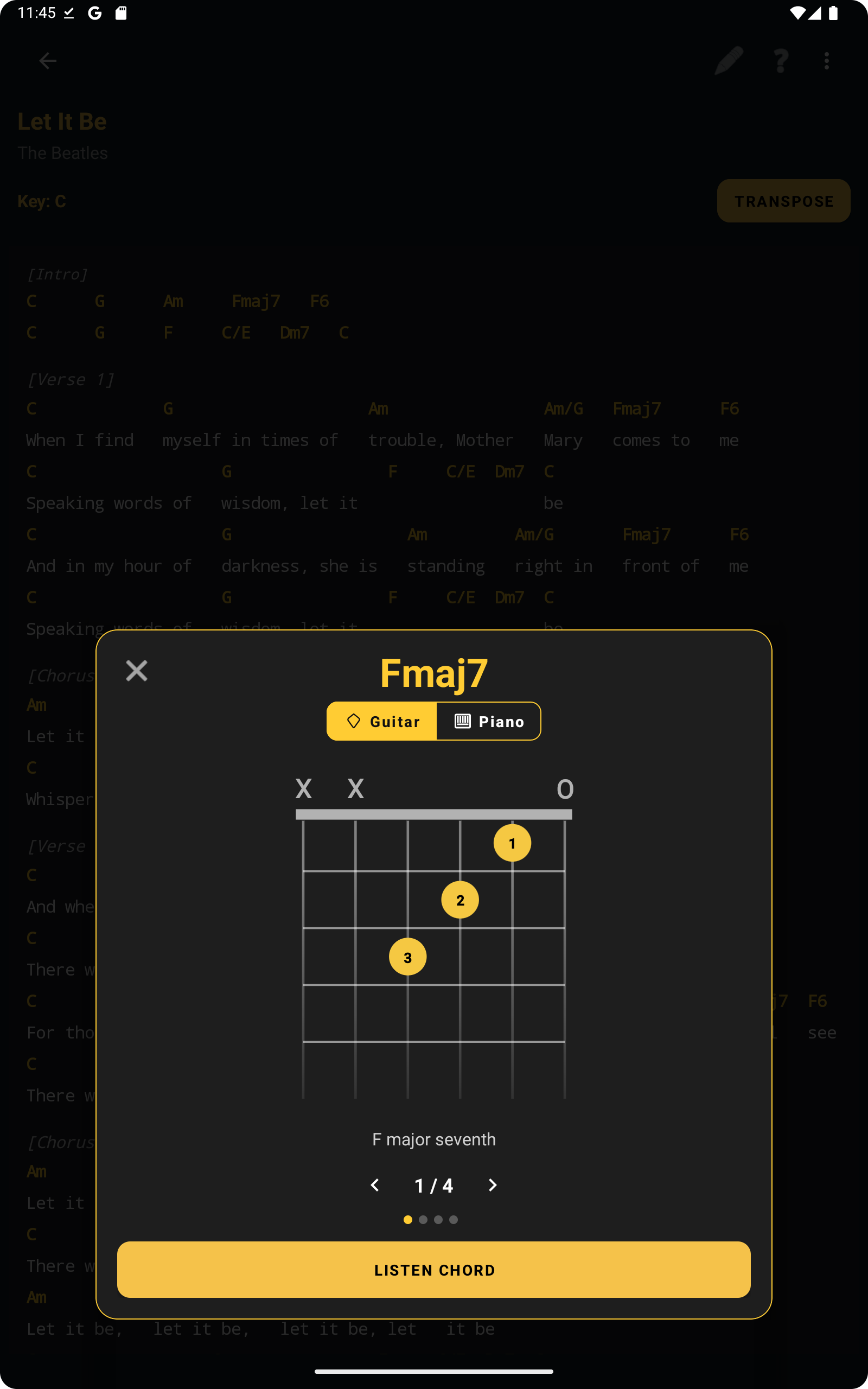
Once you choose the right song format, the next practical step is checking how the harmony feels under the fingers. That is where chord exploration inside the app adds value. Instead of leaving the song view to search elsewhere, you can confirm voicings and shapes while staying inside the same workflow.
This is useful whether you prefer chord-only songs or full lyric charts. The format affects reading, but the need to verify harmony remains the same.
Why flexibility improves the workflow
Some musicians want quick structure. Others need the full song. In real life, the same person may need different views for different songs. A simple worship chorus may work perfectly in chords-only format, while a newer song with detailed phrasing may be much safer in lyrics + chords.
That flexibility improves preparation because you do not need to force every song into the same shape. You can choose the format that matches the musical situation instead of adapting your reading style around a limitation.
FAQ
Can I use songs with chords only?
Yes. ChordFlow supports compact song views that focus on structure, sections, and harmonic information.
Can I use songs with lyrics and chords?
Yes. That format is especially useful when lyric flow and chord placement over the words matter during rehearsal or live use.
Which format is better for rehearsals?
It depends on the role and the song. If you mainly need structure, chords-only may be enough. If you still depend on the words or phrasing, lyrics with chords will usually be better.
Related Reading
Use the view that helps you play better
When the song format matches the way you actually rehearse and perform, reading becomes easier and preparation becomes more efficient. ChordFlow gives you room to work with structure, lyrics, and chord reference in a way that fits real musical situations instead of forcing a one-size-fits-all chart.
Free · No ads · Works offline