Why manual copying becomes frustrating
Manual copying sounds manageable when you only need one song, but it becomes tedious very quickly. You copy a title from one place, chords from another, then fix line breaks, clean spacing, and adjust a key that was never written clearly in the first place. By the time the song is finally usable, you have spent more time editing than preparing to play.
This is one of the most common problems in rehearsal planning. Songs come from messages, PDF charts, screenshots, and old documents. If every import starts with manual reconstruction, building a repertoire becomes much slower than it needs to be.
Import flexibility is a real workflow advantage
The value of ChordFlow's import tools is not only that they save time. The real advantage is that they let you start from the material you already have. Instead of forcing one rigid entry method, the app supports the kinds of sources musicians actually deal with in daily practice.
- Plain text when a chord sheet arrives as copied notes.
- Links when the song is available on a public page.
- PDF when rehearsal material comes from a printable chart.
- Image and OCR when the only source is a photo or scan.
That flexibility matters because repertoire building is rarely clean. The better the import flow adapts to real input, the faster you can move from collecting songs to actually rehearsing them.
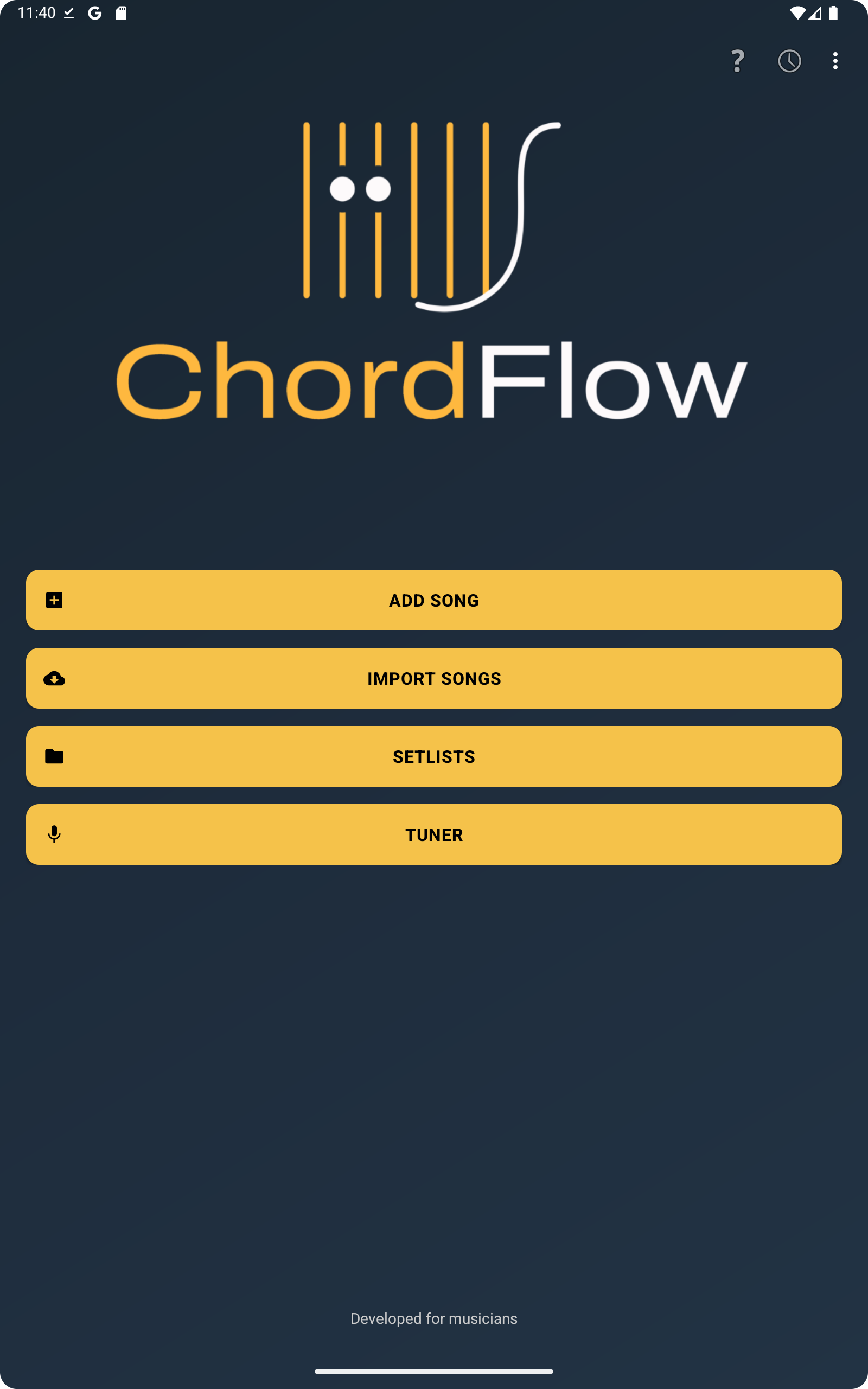
Before the screenshot below, it helps to think of the main screen as the place where imported material becomes part of your working setup, not just a temporary draft.
Review before saving is what makes the import useful
Importing quickly is helpful, but reviewing before saving is what makes the process trustworthy. A song often needs a small correction: a title adjustment, a cleaner key label, spacing fixes, or a better decision about whether the song should be stored as chords by section or lyrics with chords.
That preview step is important because musicians do not want to save messy material and fix it later in the middle of rehearsal. ChordFlow lets you refine the imported result before it becomes part of the active repertoire, which keeps the library cleaner and easier to use over time.
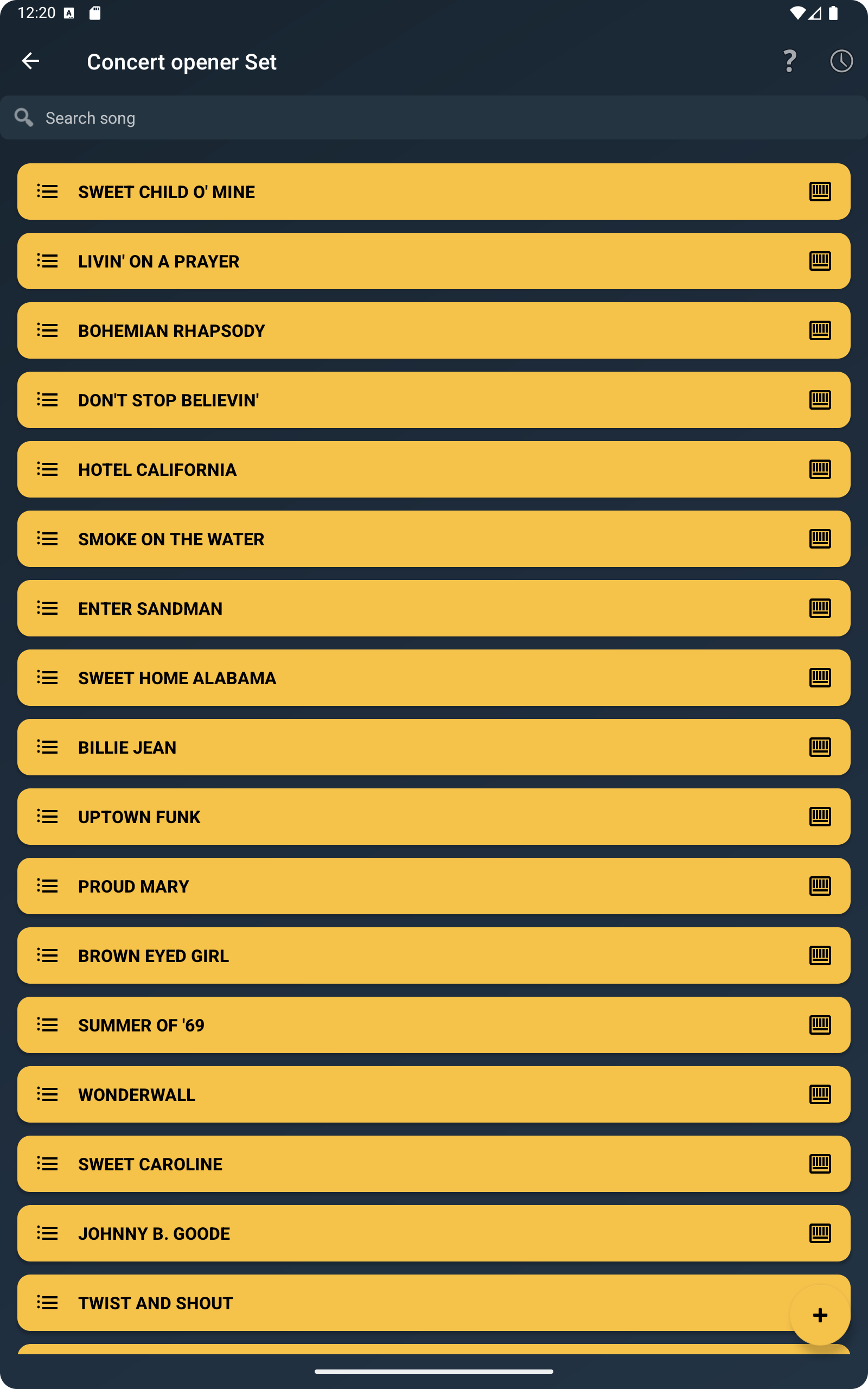
The next visual is useful here because imported songs only save time when they become clear, playable entries in the song list.
Refining imported content for real use
Import is rarely the final step. It is usually the starting point. Once a song is inside ChordFlow, you may want to adjust section labels, clean lyric placement, or make sure the chart is easy to follow on stage. That is why a flexible import workflow matters more than a one-click promise.
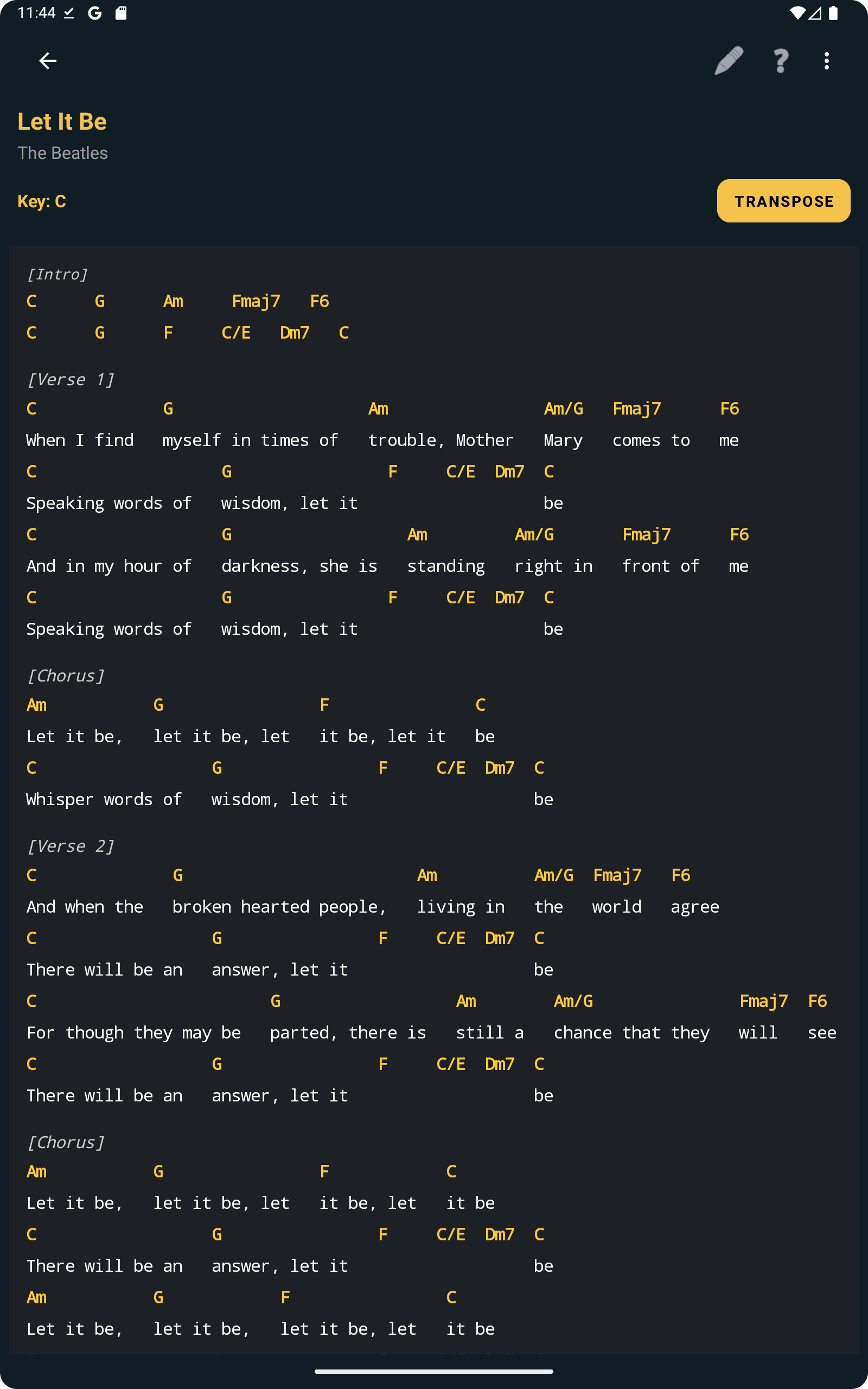
For songs that need full reading support, lyrics with chords can be the better destination. For songs where the structure matters more than the exact words, a more compact chord-centered layout may be better. Either way, the app gives you room to refine before committing.
That also helps when building a repertoire quickly. Instead of delaying import until the source is perfect, you can import first, then improve the song while keeping it inside one workflow.
How this helps build repertoire faster
When songs arrive in mixed formats, the biggest obstacle is not collecting them. It is turning them into something usable. ChordFlow helps because it shortens the distance between receiving a song and having it ready inside your repertoire.
That makes a difference when you are preparing a set in limited time. Instead of manually rebuilding every chart, you can import, preview, refine, and save. The result is not just faster entry, but a more stable process for creating rehearsal-ready material.
FAQ
Can I import songs from PDF?
Yes. PDF import is one of the useful paths in ChordFlow, especially when songs come from printable charts or rehearsal packs.
Can I review a song before saving it?
Yes. That review step is one of the most important parts of the workflow because it lets you confirm the result before the song joins your repertoire.
Can I adjust imported content before adding it?
Yes. Imported material can be refined so the final song is cleaner and easier to use in rehearsal or performance.
Related Reading
Import faster, prepare sooner
If songs reach you in different formats, a good import workflow saves more than time. It keeps your repertoire growing without turning every new chart into a manual editing session. ChordFlow helps you bring material in, review it, and move on to the part that matters most: preparing to play.
Free · No ads · Works offline